The Rose and the War
The Rose and the War
Murad Al-Assar
Born in 1983, Gaza, Palestine
Displaced in Gaza, Palestine
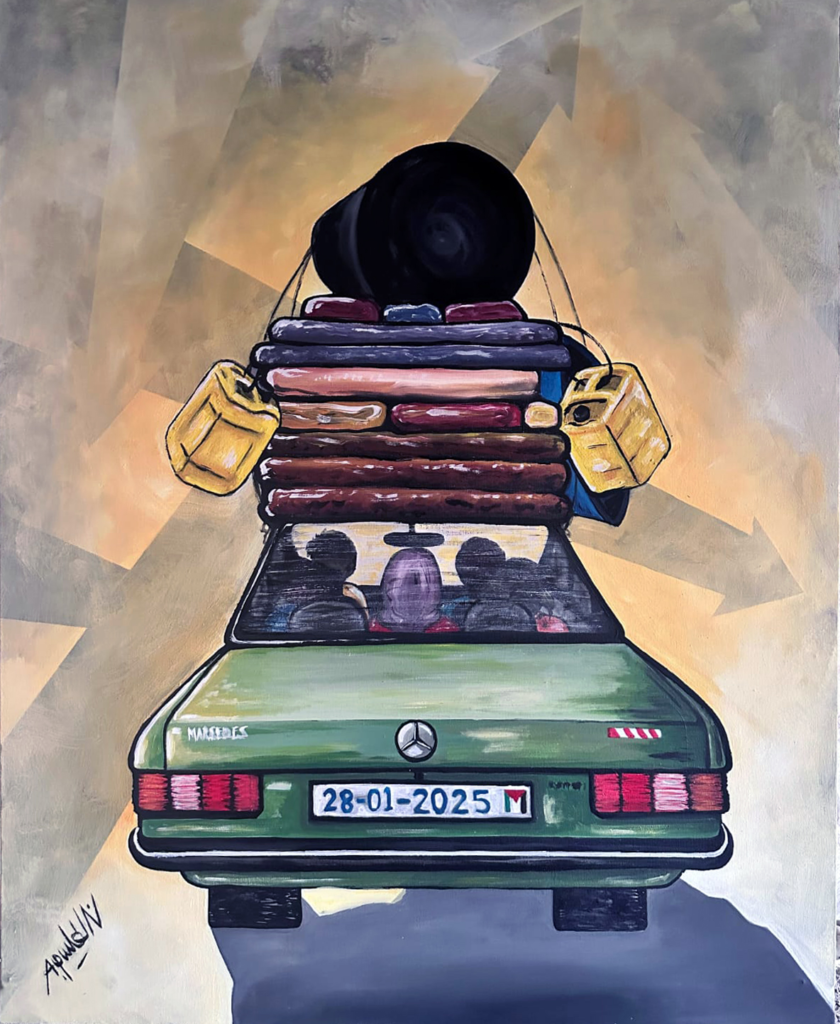
© Al-Assar Murad. Courtesy of the artist.
Al-Assar’s selections for the Gaza Biennale include Palestinian Winter, Pain and Hope, and The Rose and the War.
“Palestinian Winter depicts a winter night when the sounds of rockets mingled with the sounds of shelling. Fear filled the children’s eyes, so I gathered them in the middle of the house and brought some colors and paper to encourage them to draw as a way to relieve tension and negative energy. They drew their faces, which looked sad and fearful. I later collected these faces in a painting titled “Palestinian Winter. Gray dominates the children’s faces, as if life is gradually being taken away from them, while the yellow background reflects the light of explosions that steal childhood innocence”. The sky of this winter is not filled with rain, but with rockets falling like a dark cloud, bringing not warmth but terror and destruction. This painting depicts an unprecedented winter, where the cold does not come from the weather, but from the fear lurking in their eyes. The colorless gazes of the children tell untold stories—stories of homeless nights and dreams that burn before they blossom. In this Palestinian winter, rockets are the only visitors, and the sky promises only more pain.”
“In Pain and Hope, the story is about Salma, my 13-year-old eldest daughter, who spends some of her free time drawing in her personal notebook. Among her drawings is a painting of a girl who has lost her leg and is sad. When I chose this painting to be one of the paintings I would work on, I asked her why she chose it. She replied, ‘This beautiful girl who lost her leg must appear strong and continue her journey, spreading hope.’ This painting expresses the emotional contradiction between suffering and the inner strength that emerges in difficult times. It reflects the reality of the Palestinian girl who lost her leg, but whose heart still beats with hope amid the darkness of pain and hardship faced by these children in the tents to which they were displaced after being forced to leave their homes, which were bombed and destroyed by war.”
“In The Rose and the War, I was inspired to create this painting by a drawing I found in blue pen on a page in a notebook. The way the face was drawn caught my attention, and I didn’t know who had drawn it at the time. When I started redrawing it on canvas, my ten-year-old son, Muhammad, saw it and said, “That’s my face, Dad, you drew it!” He was very happy that I had redrawn it, adding some elements that carry deep and painful messages about the innocence of childhood lost in the midst of conflict and war. The painting shows a sad child holding a bouquet of flowers, symbolizing the contrast between the beauty of innocence and hope and the harsh reality of war. The child in this painting represents generations that have witnessed wars and conflicts, where childhood suffers the worst kinds of pain and suffering. However, the roses carried by the child symbolize hope and purity, a reminder that beauty still exists even in the darkest of circumstances. Roses, usually associated with peace and beauty, symbolize here that hope can flourish even in the face of violence and destruction.”
Murad Al-Assar was born in 1983 in the city of Deir al-Balah, located in the central Gaza Strip. He graduated from Al-Aqsa University in 2006 with a degree in Art Education. Al-Assar continues his work in the field of children’s psychological support and empowerment through art. He worked with UNRWA for over a year on the Summer Games Program and a project decorating the outer walls of UNRWA facilities, and spent more than four years working at the Al-Qattan Center for the Child in the “Child-Friendly Areas” program. Al-Assar has taken many courses on dealing with children’s drawings, analyzing them, and providing psychological support to children through art and is a specialists in this field. He also worked with the Nawa Association for Culture and Arts and has participated in many art events, from creating murals to group exhibitions. Al-Assar continues to work with children in Gaza to this day. This series for the Gaza Biennale is based on work he created with children during the genocide.
الوردة والحرب
مراد معين العصار
ولدت عام 1983، في غزة، فلسطين
نازحة في جنوب غزة، فلسطين
وتشمل أعمال العصار المختارة للمشاركة في بينالي غزة “الشتاء الفلسطيني” و”الألم والأمل” و”الوردة والحرب”.
”الشتاء الفلسطيني“ يصور ليلة شتوية اختلطت فيها أصوات الصواريخ بأصوات القصف. كان الخوف يملأ عيون الأطفال، لذا جمعتهم في وسط المنزل وأحضرت بعض الألوان والورق لتشجيعهم على الرسم كوسيلة لتخفيف التوتر والطاقة السلبية. رسموا وجوههم التي بدت حزينة وخائفة. ثم جمعت هذه الوجوه لاحقاً في لوحة بعنوان ”الشتاء الفلسطيني“. يسيطر اللون الرمادي على وجوه الأطفال، وكأن الحياة تُسلب منهم تدريجياً، بينما تعكس الخلفية الصفراء ضوء الانفجارات التي تسرق براءة الطفولة”. سماء هذا الشتاء ليست مليئة بالمطر، بل بالصواريخ التي تتساقط كسحابة مظلمة، لا تجلب الدفء بل الرعب والدمار. تصور هذه اللوحة شتاءً غير مسبوق، حيث لا يأتي البرد من الطقس، بل من الخوف الكامن في عيونهم. تروي نظرات الأطفال الباهتة قصصاً لم تُروَ بعد — قصص ليالٍ بلا مأوى وأحلام تتلاشى قبل أن تزهر. في هذا الشتاء الفلسطيني، الصواريخ هي الزوار الوحيدون، والسماء لا تبشر إلا بمزيد من الألم.”
”في لوحة “الألم والأمل”، تدور القصة حول سلمى، ابنتي الكبرى البالغة من العمر 13 عامًا، التي تقضي بعض وقت فراغها في الرسم في دفترها الشخصي. ومن بين رسوماتها لوحة لفتاة فقدت ساقها وهي حزينة. عندما اخترت هذه اللوحة لتكون إحدى اللوحات التي سأعمل عليها، سألتها عن سبب اختيارها لها. فأجابت: ”هذه الفتاة الجميلة التي فقدت ساقها يجب أن تبدو قوية وتواصل رحلتها، تنشر الأمل.“ تعبر هذه اللوحة عن التناقض العاطفي بين المعاناة والقوة الداخلية التي تظهر في الأوقات الصعبة. وهي تعكس واقع الفتاة الفلسطينية التي فقدت ساقها، لكن قلبها لا يزال ينبض بالأمل وسط ظلام الألم والمشقة التي يواجهها هؤلاء الأطفال في الخيام التي نزحوا إليها بعد أن أُجبروا على مغادرة منازلهم، التي قصفت ودمرت بسبب الحرب.”
”في لوحة “الوردة والحرب”، استلهمت فكرة هذه اللوحة من رسم وجدته بقلم أزرق على صفحة في دفتر ملاحظات. لفتت طريقة رسم الوجه انتباهي، ولم أكن أعرف من رسمه في ذلك الوقت. عندما بدأت في إعادة رسمه على قماش، رآه ابني محمد البالغ من العمر عشر سنوات وقال: “هذا وجهي يا أبي، أنت من رسمته!” كان سعيداً جداً لأنني أعدت رسمه، مضيفاً بعض العناصر التي تحمل رسائل عميقة ومؤلمة عن براءة الطفولة المفقودة وسط الصراع والحرب. تُظهر اللوحة طفلاً حزيناً يحمل باقة من الزهور، مما يرمز إلى التناقض بين جمال البراءة والأمل والواقع القاسي للحرب. يمثل الطفل في هذه اللوحة الأجيال التي شهدت الحروب والصراعات، حيث تعاني الطفولة من أسوأ أنواع الألم والمعاناة. ومع ذلك، فإن الورود التي يحملها الطفل ترمز إلى الأمل والنقاء، وتذكرنا بأن الجمال لا يزال موجودًا حتى في أحلك الظروف. فالورود، التي ترتبط عادةً بالسلام والجمال، ترمز هنا إلى أن الأمل يمكن أن يزدهر حتى في مواجهة العنف والدمار.”
مراد معين العصار فنان تشكيلي فلسطيني من مدينة دير البلح في قطاع غزة، من مواليد عام 1983. حاصل على بكالوريوس تربية فنية من جامعة الأقصى، أب لأربعة أطفال ، وبعمل منذ سنوات في مجالات متعددة تجمع بين الفن، التعليم، والعمل المجتمعي مع الأطفال.
شاركت في العديد من المشاريع الفنية والثقافية، منها رسم الجداريات، تنظيم ورش فنية للأطفال، والمشاركة في مبادرات تعزز حقوق الإنسان والتعبير الإبداعي لدى الشباب ، شاركت أيضا في العديد من المعارض الجماعية المحلية والدولية.
عملت في مؤسسات محلية ودولية كمُدرب ومنسق لمشاريع تعنى بالفن والعمل مع الأطفال، ولها مساهمات بارزة في تطوير أدوات فنية نفسية من خلال رسوم الأطفال