The Red Feet
The Red Feet
Fatima Ali Abu Owdah
Born in 1978, Gaza, Palestine
Displaced in Al-Mawasi, Khan Yunis
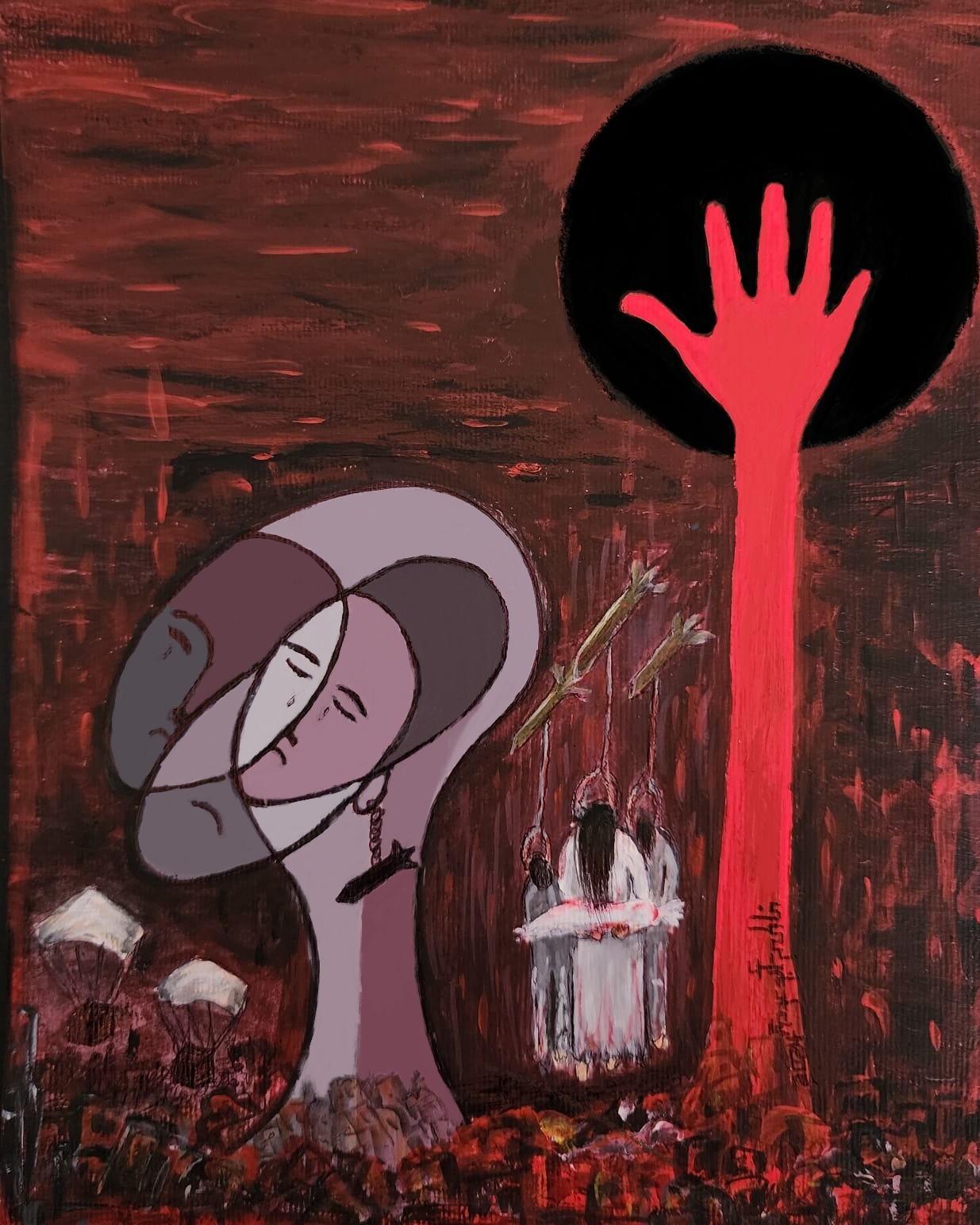
© Ali Abu Owdah Fatima. Courtesy of the artist.
Fatima Ali Abu Owdah presents the work she has done with children in Gaza, as well as her own paintings. Owdah’s work with children has turned pedagogy into poetry, creating collective works of astonishing beauty. Meanwhile her paintings, “were produced while death chases me from place to place” and translates into form the harsh reality of bombed homes and displacement amid genocide. It is a message that reveals the horrors faced by the people of Gaza. Owdah lost everything during this war—her paintings, her studio, and her home were crushed under the rubble. With only a few pieces of paper and simple colors that she made herself, she works from her tent, producing paintings, with a brush made from her own hair, challenging the might of the world.
Amid the rubble of buildings, you will witness bloody footprints and a few red steps, documenting the forms of death beneath the ruins and serving as a testament to the genocide. These once beautiful pink feet, which ran along the beach or took steps toward dreams woven by a devoted mother dreaming of a son to be proud of, now tread through tragedy. The reality of genocide contradicts what is called the ongoing negotiations, where procrastination reigns, making the hope for a truce or ceasefire seem like a mirage. This contradiction led me to use both red and green. The blood-red in my paintings evokes fear and dread, while the green offers a space of hope, representing eternal peace and everlasting life.
Death manifests in many ways—burning, bombing, burial under rubble, disease, famine, or even by the parachutes dropped from aid planes onto tents or houses, killing the hungry beneath them. A red hand is raised to the sky, pleading for the war to stop.
The phantom plane showcasing its power over the quiet, sleeping city beneath the rubble contrasts with the green kite soaring in the red space, sending a message of hope: “You are not alone; God is with you.”
There is a profound contrast—ships that once sailed the seas now sail the skies as children search for a life without death or suffering.
The philosophy of contradiction is a message that conveys the depth of the suffering and pain. Thirteen hours of waiting to enter the operating room mirrors the thirteen instances of displacement, with red blood dripping from eyes, feet, and hands, spilling from the body’s holes and pooling as drops on the hospital floor—forming a curse upon those who have abandoned humanity. This painting symbolizes our worn-out clothes, torn tents, frail bodies, and broken hearts. Autumn passed, then winter, then summer—long months of hardship—and still, we await the arrival of spring
The contradiction between stillness and movement in war reveals a longing for quietude, an escape from the relentless chaos of motion and trembling. No one knows how the heart groans and the soul aches. The heart breaks, the body is crushed. I started intertwining my hands with my feet, moving like a rocking chair, my eyes darting everywhere with intensity, scattering everything in the house. My breaths quickened, exhaling and inhaling in desperation, wishing it were an earthquake so it would end. But the deafening sounds of rockets exploding—especially the relentless detonations of the fire belt—were too much for my ears. In that moment, I dreamed of stillness, even if life stops.
When you give yourself a chance to adapt to events, you create headlines of willpower and resilience for survival. The change in life’s course during war changed the direction of my art. I once painted a bright Gaza, with vivid colors striving for revival. Now, I paint a Gaza that groans and cries for help. My colors are now drenched in blood, burning like fire, as my heart and feelings burn. They reflect the reality and horrors faced by Gaza’s people—the displacement, homelessness, and genocide.
My paintings are the product of life’s contradictions—noise followed by silence, sadness giving way to joy, separation followed by reunion, red feet followed by pink feet.
A Story of an Artist in War
It is the impact of rubble, the dust, and the acrid smell of gunpowder that strikes our faces. We are in the middle of the event. We did not hear the explosion, but everyone around us, even from great distances, heard the deafening blast that shook the entire region. She reacted faster than we did, rising instantly and screaming “Blood, blood!” I shook the debris off my body—I was in my tent, but it had no walls.
The burning rubble and shrapnel clung to the mattress, but by the grace of God, we were saved. I looked ahead and saw him drenched in blood. On the other side, my son was injured, and beside him, his brother was wounded as well. “Praise be to God,” I said, as I realized their injuries were minor, but I quickly grasped the severity of my husband’s wound—his facial features were unrecognizable. My feet became heavy, glued to the ground, and my strength waned. But I said, “O God, You are with me,” and freed my feet from their burden to reach him quickly. I reassured him, “You are okay,” becoming his paramedic. My sons and I carried him, still reciting, “God is sufficient for us, and He is the best disposer of affairs.” The world darkened before my eyes, just as it had for him—for he could no longer see.
Fatima Ali Abu Owdah was born in Gaza, Palestine. She received a bachelor’s degree in art education from Al-Aqsa University, and has been an art teacher since 2007. Abu Owdah worked as a designer for the Palestinian History Tapestry at Oxford Brooks University. She supervised many art workshops for university graduates and women from the local community. One of her paintings was represented as part of the UNRWA Quilt in the Middle East. Abu Owdah supervised schoolgirls in illustrating literary stories for Orchid Company and participated in numerous art workshops across various fields, including mosaic, textiles, ceramics, photography, sculpture, and printmaking. In 2021, Abu Owdah participated in many exhibitions both locally and internationally, and held a solo exhibition, Traces of the Soul, at Dar al-Kalima University. She has participated in numerous group exhibitions, including Life and Hope, Nisan Flower Exhibition, Corona and Art Exhibition, Formations Exhibition, Colored Wounds Exhibition, Mosaic Art Piece Exhibition, The Independent Commission for Human Rights Exhibition, Shards of the City Exhibition, the Opening Exhibition at the Bethlehem Gate Gallery, and Palestine: A Tale and Color in London at the Palace of Palestine.
الأقدام الحمراء
فاطمة علي أبو عودة
مواليد ١٩٧٨، غزة، فلسطين
نازحة من المواصي، خان يونس
تقدم فاطمة أبو عودةتقدم فاطمة علي أبو عودة الأعمال التي قامت بها مع الأطفال في غزة، بالإضافة إلى لوحاتها الخاصة. حولت أعمال عودة مع الأطفال التربية إلى شعر، وخلقت أعمالاً جماعية ذات جمال مذهل. في الوقت نفسه، تم إنتاج لوحاتها ”بينما كان الموت يطاردني من مكان إلى آخر“، وتترجم إلى شكل الواقع القاسي للمنازل المدمرة والتهجير وسط الإبادة الجماعية. إنها رسالة تكشف عن الأهوال التي يواجهها سكان غزة. فقدت عودة كل شيء خلال هذه الحرب – فقد دمرت لوحاتها واستوديوها ومنزلها تحت الأنقاض. وبواسطة بضع قطع من الورق وألوان بسيطة صنعتها بنفسها، تعمل من خيمتها، وتنتج لوحات بفرشاة مصنوعة من شعرها، متحدية قوة العالم.
وسط أنقاض المباني، ستشاهد آثار أقدام دامية وبعض الخطوات الحمراء، التي توثق أشكال الموت تحت الأنقاض وتشكل شهادة على الإبادة الجماعية. هذه الأقدام الوردية التي كانت جميلة في يوم من الأيام، والتي كانت تجري على طول الشاطئ أو تخطو نحو أحلام نسجتها أم مخلصة تحلم بابن تفخر به، تسير الآن في خضم المأساة. تتناقض حقيقة الإبادة الجماعية مع ما يسمى بالمفاوضات الجارية، حيث يسود التسويف، مما يجعل الأمل في هدنة أو وقف إطلاق النار يبدو وكأنه سراب. دفعني هذا التناقض إلى استخدام اللونين الأحمر والأخضر. يثير اللون الأحمر الدموي في لوحاتي الخوف والرعب، بينما يوفر اللون الأخضر مساحة للأمل، ويمثل السلام الأبدي والحياة الأبدية.
تتجلى الموت بطرق عديدة – الحرق، القصف، الدفن تحت الأنقاض، المرض، المجاعة، أو حتى بالمظلات التي تُلقى من طائرات الإغاثة على الخيام أو المنازل، مما يؤدي إلى مقتل الجياع تحتها. ترتفع يد حمراء إلى السماء، تناشد بوقف الحرب.
تتناقض الطائرة الشبحية التي تُظهر قوتها على المدينة الهادئة النائمة تحت الأنقاض مع الطائرة الورقية الخضراء التي تحلق في الفضاء الأحمر، مرسلة رسالة أمل: ”أنت لست وحدك؛ الله معك“.
هناك تباين عميق — السفن التي كانت تبحر في البحار تبحر الآن في السماء بينما يبحث الأطفال عن حياة خالية من الموت والمعاناة.
فلسفة التناقض هي رسالة تنقل عمق المعاناة والألم. ثلاث عشرة ساعة من الانتظار لدخول غرفة العمليات تعكس ثلاث عشرة حالة من النزوح، مع دم أحمر يتساقط من العيون والقدمين واليدين، وينسكب من ثقوب الجسد ويتجمع على أرضية المستشفى على شكل قطرات – مشكلاً لعنة على أولئك الذين تخلوا عن الإنسانية. ترمز هذه اللوحة إلى ملابسنا البالية، وخيامنا الممزقة، وأجسادنا الضعيفة، وقلوبنا المكسورة. مر الخريف، ثم الشتاء، ثم الصيف – أشهر طويلة من المشقة – وما زلنا ننتظر وصول الربيع
يكشف التناقض بين السكون والحركة في الحرب عن توق إلى الهدوء، هروبًا من الفوضى المستمرة للحركة والارتعاش. لا أحد يعرف كيف يئن القلب وتؤلم الروح. القلب ينفطر، والجسد ينكسر. بدأت أربط يدي بقدمي، وأتحرك ككرسي هزاز، وعيناي ترمقان كل مكان بشدة، وتبعثران كل شيء في المنزل. تسارعت أنفاسي، وأخذت أزفر وأستنشق في يأس، متمنية أن يكون زلزالاً حتى ينتهي. لكن أصوات انفجارات الصواريخ الصاخبة – خاصة التفجيرات المتواصلة لحزام النار – كانت أكثر من أن تتحملها أذناي. في تلك اللحظة، حلمت بالسكون، حتى لو توقفت الحياة.
عندما تمنح نفسك فرصة للتكيف مع الأحداث، فإنك تخلق عناوين رئيسية عن قوة الإرادة والمرونة من أجل البقاء. أدى التغيير في مسار الحياة أثناء الحرب إلى تغيير اتجاه فني. كنت أرسم في السابق غزة مشرقة، بألوان زاهية تسعى إلى النهضة. الآن، أرسم غزة التي تئن وتصرخ طلباً للمساعدة. ألواني الآن مبللة بالدم، تحترق كالنار، كما يحترق قلبي ومشاعري. إنها تعكس الواقع والفظائع التي يواجهها شعب غزة – التشرد، والتشرد، والإبادة الجماعية.
لوحاتي هي نتاج تناقضات الحياة – الضجيج الذي يتبعه الصمت، والحزن الذي يفسح المجال للفرح، والانفصال الذي يتبعه لم الشمل، والأقدام الحمراء التي تتبعها الأقدام الوردية.
قصة فنانة في الحرب
إنه تأثير الأنقاض والغبار ورائحة البارود النفاذة التي تضرب وجوهنا. نحن في خضم الحدث. لم نسمع الانفجار، لكن كل من حولنا، حتى من مسافات بعيدة، سمعوا الدوي المدوي الذي هز المنطقة بأكملها. كانت رد فعلها أسرع منا، فقامت على الفور وصرخت ”دم، دم!“ نفضت الأنقاض عن جسدي – كنت في خيمتي، لكنها لم تكن لها جدران.
التصقت الأنقاض المحترقة والشظايا بالمرتبة، لكن بفضل الله، نجونا. نظرت إلى الأمام ورأيته غارقًا في الدماء. على الجانب الآخر، كان ابني مصابًا، وبجانبه كان شقيقه مصابًا أيضًا. قلت: ”الحمد لله“، عندما أدركت أن إصاباتهم طفيفة، لكنني سرعان ما أدركت خطورة إصابة زوجي – لم أستطع التعرف على ملامح وجهه. أصبحت قدمي ثقيلة، ملتصقة بالأرض، وتضاءلت قوتي. لكنني قلت: ”يا الله، أنت معي“، وحررت قدمي من ثقلها لأصل إليه بسرعة. طمأنته قائلة: ”أنت بخير“، وأصبحت مسعفته. حملته أنا وأبنائي، وما زلنا نردد: ”الله كافينا، وهو خير مقدر“. أظلم العالم أمام عيني، تمامًا كما أظلم أمام عينيه، لأنه لم يعد قادرًا على الرؤية.
ولدت فاطمة علي أبو عودة في غزة، فلسطين. حصلت على درجة البكالوريوس في التربية الفنية من جامعة الأقصى، وتعمل مدرسة فنون منذ عام 2007. عملت أبو عودة كمصممة لنسيج التاريخ الفلسطيني في جامعة أكسفورد بروكس. أشرفت على العديد من ورش العمل الفنية لخريجي الجامعات والنساء من المجتمع المحلي. تم عرض إحدى لوحاتها كجزء من نسيج الأونروا في الشرق الأوسط. أشرفت أبو عودة على طالبات المدارس في رسم قصص أدبية لشركة Orchid وشاركت في العديد من ورش العمل الفنية في مختلف المجالات، بما في ذلك الفسيفساء والمنسوجات والسيراميك والتصوير الفوتوغرافي والنحت والطباعة. في عام 2021، شاركت أبو عودة في العديد من المعارض المحلية والدولية، وأقامت معرضًا فرديًا بعنوان ”آثار الروح“ في جامعة دار الكلمة. شاركت في العديد من المعارض الجماعية، بما في ذلك معرض ”الحياة والأمل“، ومعرض زهرة نيسان، ومعرض ”كورونا والفن“، ومعرض ’تشكيلات‘، ومعرض ”جروح ملونة“، ومعرض ”قطع فنية من الفسيفساء“، ومعرض ”اللجنة المستقلة لحقوق الإنسان“، ومعرض ”شظايا المدينة“، والمعرض الافتتاحي في معرض بوابة بيت لحم، ومعرض ”فلسطين: حكاية ولون“ في قصر فلسطين بلندن.