Loss
Farah Qarmout
Born in Gaza, Palestine
Displaced in Cairo, Egypt
© Qarmout Farah. Courtesy of the artist.
© Qarmout Farah. Courtesy of the artist.
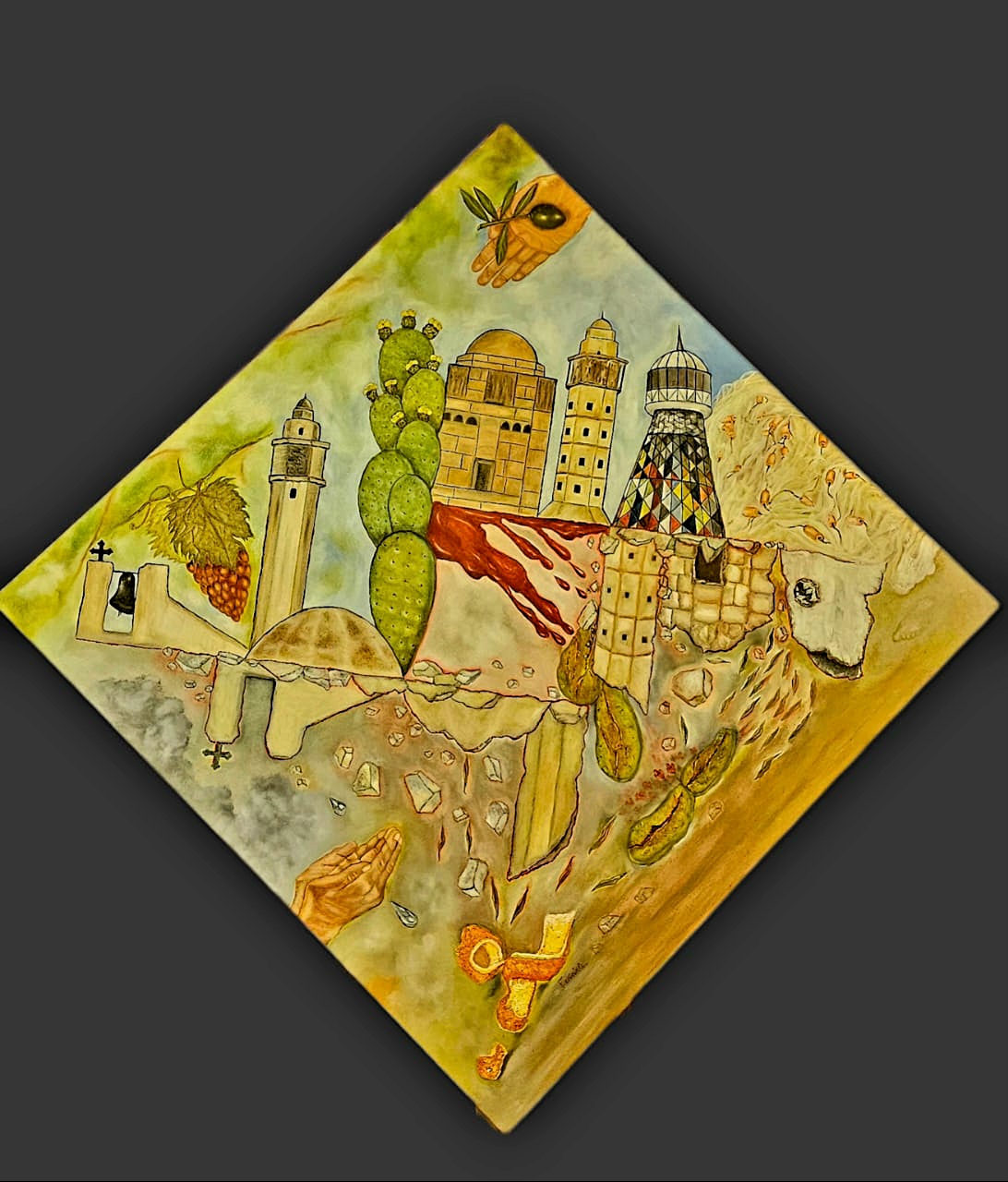
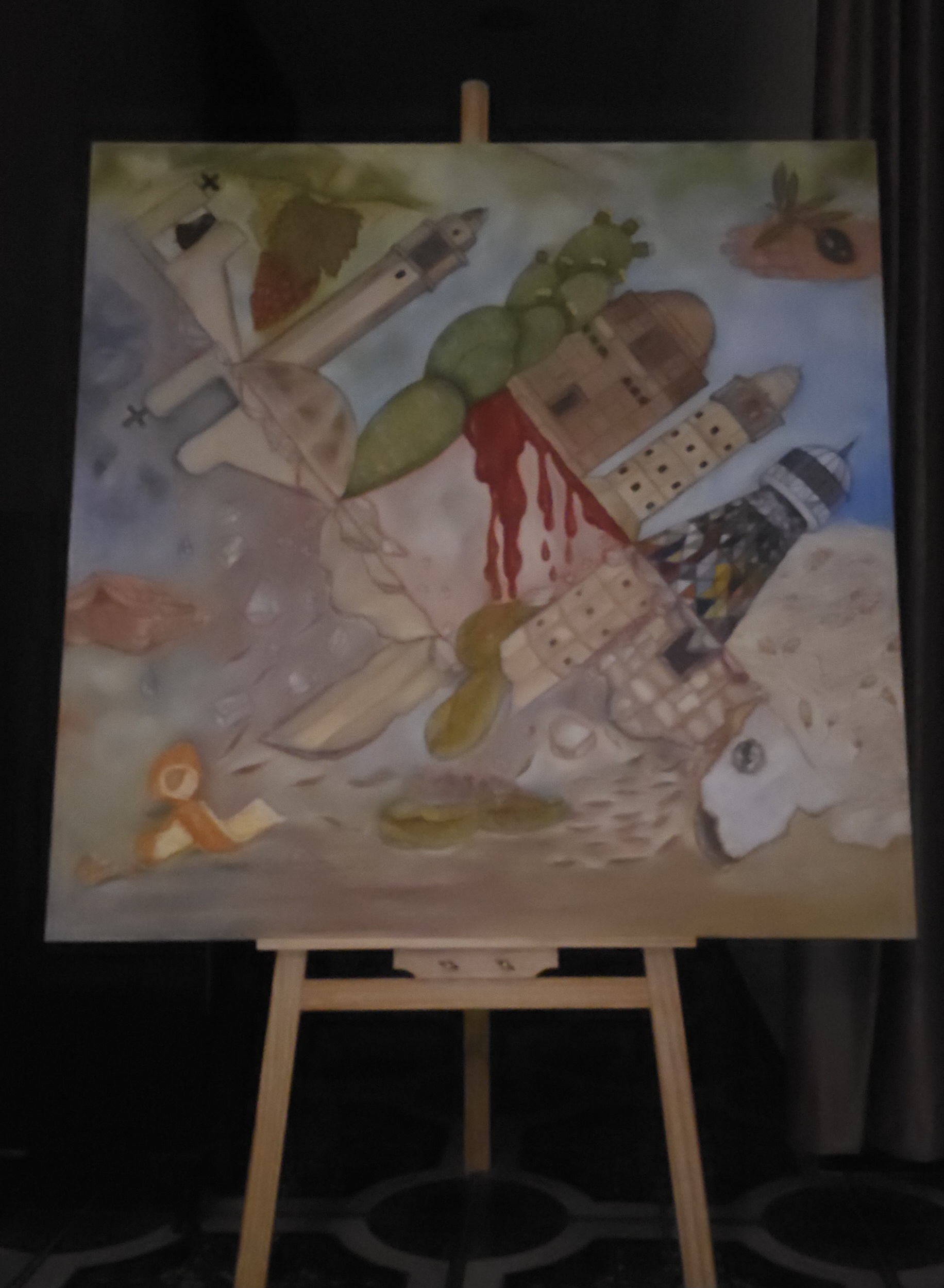
Qarmout presents an exhibition consisting of a single work: a one-meter by one-meter painting. Her work addresses one of the biggest questions in the history of art and within art itself: How can art reckon with the unimaginable and, therefore, the unrepresentable? This question has been asked of art in the wake of genocide. We are now asking it in its midst. Qarmout’s question goes to the heart of the Gaza Biennale project.
The artist takes up this challenge by shifting the focus from the brutality of massacres to the experience of loss. Her approach attempts to represent the unrepresentable, and she does this by thinking with shapes and colors. Rather than focusing on specific details, her approach emphasizes the general. The pain and reality of people’s experiences and suffering are beyond our ability to imagine and beyond representation.
We are living in a time of genocide, of horrors and their details that are unrepresentable, and yet they must be seen, felt, and understood for some reckoning to take place, and for healing to begin. Qarmout believes in beauty, in life, and her work reflects that. To represent the feeling of loss, as a way to heal the unimaginable traumas of this war, is her method. We are perhaps not far from Malevich’s Black Square, the “zero point of painting,” as Qarmout attempts to push representation to its limits. It is perhaps not a coincidence that she chose the dimensions of one-meter by one-meter for this work.
Farah Qarmout began her journey into the world of fine art when she decided to search for her passion and dedicate herself to practicing art. In 2019, she started painting with various mediums: pencil, charcoal, pastels, and watercolors. Qarmout shared her drawings on social media, and her simple works received admiration and encouragement, which motivated her to pursue art as a refined tool for self-expression, and to convey her artistic taste and opinions on the various issues around her.
Her work with oil painting began when she participated in an art workshop for the first time at the Dar al-Kalima University Training Center in Gaza in 2021. She produced oil paintings that amazed many, earning her recognition and leading to the opportunity to hold a solo exhibition at the Dar al-Kalima University Center. In the exhibition Relative Calm (2023), Qarmout discovered a passion for investigating colors from observations of nature and the objects around her, revealing the details and beauty of everything she sees. Her success and passion for art led to a desire to learn more and study the world of fine art. She showed competence in contemporary art and participated in various group exhibitions for photography, conceptual painting, sculpture, and printmaking. Her artworks include twenty oil paintings, three sculptures, and ten prints. Her work has been in exhibitions in Gaza and the West Bank, most recently in This is Not an Exhibition (2024) at the Palestinian Museum and Turning Point at the Qattan Center in Ramallah.
The recent war in Gaza has affected the entire Palestinian artistic environment, marking an end or a beginning for every Palestinian in Gaza. Qarmout lost her studio and had been living a life of displacement, anxiety, and deprivation for months until she was able to flee with her family to Egypt. The fate of her remaining paintings in her family’s home is unknown. Her works on display in Gaza have all been destroyed due to the intense Israeli bombing of the Shifa area.
Qarmout finds in art a refuge and a refined tool to affirm the ongoing existence of Palestine’s intellectual and cultural traditions. She takes pride in belonging to this rich environment—Palestine, with all its historical, geographical, and cultural components. For Qarmout, art is not just a cultural field but a vessel to connect with every place and time, and the highest means of expression and participation in all the issues that matter to humanity.
أمل وألم
فرح قرموط
ولد في غزة، فلسطين
نزح إلى القاهرة، مصر
تقدم قرموط معرضاً يتألف من عمل واحد: لوحة بحجم متر في متر. يتناول عملها أحد أكبر الأسئلة في تاريخ الفن وداخل الفن نفسه: كيف يمكن للفن أن يتعامل مع ما لا يمكن تصوره، وبالتالي ما لا يمكن تمثيله؟ طُرح هذا السؤال على الفن في أعقاب الإبادة الجماعية. ونحن نطرحه الآن في خضمها. يسأل سؤال قرموط جوهر مشروع بينالي غزة.
تتصدى الفنانة لهذا التحدي بتحويل التركيز من وحشية المذابح إلى تجربة الفقدان. تحاول مقاربتها تمثيل ما لا يمكن تمثيله، وتفعل ذلك من خلال التفكير بالأشكال والألوان. بدلاً من التركيز على تفاصيل محددة، تركز مقاربتها على العموم. إن ألم وواقع تجارب الناس ومعاناتهم يتجاوزان قدرتنا على التخيل ويتجاوزان التمثيل.
نحن نعيش في زمن الإبادة الجماعية، والفظائع وتفاصيلها التي لا يمكن تمثيلها، ومع ذلك يجب رؤيتها والشعور بها وفهمها حتى يتم الحساب وحتى تبدأ عملية الشفاء. تؤمن قرموط بالجمال والحياة، وينعكس ذلك في عملها. إن تمثيل الشعور بالخسارة، كوسيلة لشفاء الصدمات التي لا يمكن تصورها من هذه الحرب، هو أسلوبها. ربما نحن لسنا بعيدين عن لوحة ماليفيتش ”المربع الأسود“، ”نقطة الصفر في الرسم“، حيث تحاول قرموط دفع التمثيل إلى أقصى حدوده. ولعله ليس من قبيل المصادفة أنها اختارت أبعاد مترًا واحدًا في متر واحد لهذا العمل.
بدأت فرح قرموط رحلتها في عالم الفنون الجميلة عندما قررت البحث عن شغفها وتكريس نفسها لممارسة الفن. في عام 2019، بدأت الرسم باستخدام وسائل مختلفة: القلم الرصاص والفحم والباستيل والألوان المائية. شاركت قرموط رسوماتها على وسائل التواصل الاجتماعي
، وحظيت أعمالها البسيطة بالإعجاب والتشجيع، مما حفزها على متابعة الفن كأداة راقية للتعبير عن الذات، ولنقل ذوقها الفني وآرائها حول مختلف القضايا من حولها.
بدأت عملها بالرسم الزيتي عندما شاركت لأول مرة في ورشة عمل فنية في مركز دار الكلمة الجامعي للتدريب في غزة عام 2021. أنتجت لوحات زيتية أذهلت الكثيرين، مما أكسبها شهرة وأدى إلى فرصة إقامة معرض فردي في مركز جامعة دار الكلمة. في معرض ”الهدوء النسبي“ (2023)، اكتشفت قرموط شغفها باستكشاف الألوان من خلال ملاحظات الطبيعة والأشياء من حولها، وكشفت عن تفاصيل وجمال كل ما تراه. أدى نجاحها وشغفها بالفن إلى رغبتها في تعلم المزيد ودراسة عالم الفنون الجميلة. أظهرت كفاءة في الفن المعاصر وشاركت في العديد من المعارض الجماعية للتصوير الفوتوغرافي والرسم المفاهيمي والنحت والطباعة. تشمل أعمالها الفنية عشرين لوحة زيتية وثلاث منحوتات وعشر مطبوعات. عُرضت أعمالها في معارض في غزة والضفة الغربية، كان آخرها معرض ”هذا ليس معرضًا“ (2024) في المتحف الفلسطيني ومعرض ”نقطة تحول“ في مركز قطان في رام الله.
أثرت الحرب الأخيرة في غزة على البيئة الفنية الفلسطينية بأسرها، حيث شكلت نهاية أو بداية لكل فلسطيني في غزة. فقدت قرموط استوديوها وعاشت حياة التشرد والقلق والحرمان لعدة أشهر حتى تمكنت من الفرار مع عائلتها إلى مصر. ولا يُعرف مصير لوحاتها المتبقية في منزل عائلتها. وقد دمرت جميع أعمالها المعروضة في غزة بسبب القصف الإسرائيلي المكثف لمنطقة الشفاء.
تجد قرموط في الفن ملاذاً وأداة راقية لتأكيد استمرار وجود التقاليد الفكرية والثقافية الفلسطينية. وهي تفخر بانتمائها إلى هذه البيئة الغنية – فلسطين، بكل مكوناتها التاريخية والجغرافية والثقافية. بالنسبة لقرموط، الفن ليس مجرد مجال ثقافي، بل هو وسيلة للتواصل مع كل مكان وزمان، وأعلى وسائل التعبير والمشاركة في جميع القضايا التي تهم الإنسانية.